This website help you learn how to understand consumer shopping behavior using raw data analysis from online websites. Knowing what to look for, and decide what you are trying to understand to explore the consumer behavior questions about what they buy and where they buy. Using H&M as a case study, we will look at purchase data, online audience information, and company reports to understand how people shop online and in physical stores.
What is customer behavior analysis
and why is it important?
Customer behavior is a systematic examination of the customers actions, and using these actions to understand the pattern
in how people purchase and interact with a business.
Grasping customer behavior is a cornerstone of sustainable business growth and enhanced customer satisfaction to a business.
An effective customer behavior analysis provides the foundation of strategic desicion makin, and impact everything from product
development to customer service protocols.
Things Customer Behavior analytics can do..

1. Identifying patterns helps you make accurate predictions for the future
2. Drilling down on existing customer behavior helps you win over new customers
3. Personalizing customer experiences drive sales
4. Understanding behavior helps you to increase customer retention
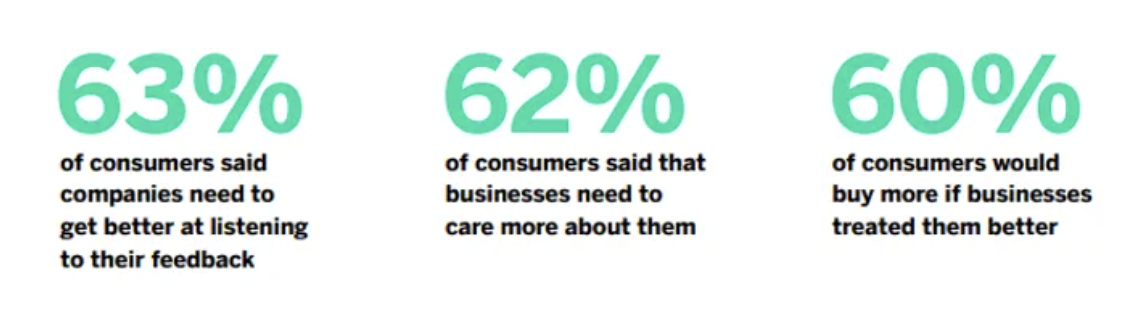
The data in figure 1.1 show why consumer behavior analysis should include more than
transaction data. Purchase records can tell a company what customers bought, but feedback
and experience data can help explain why customers continue buying, stop buying, or change
their behavior. This suggests that understanding consumer behavior requires combining sales
data with information about customer satisfaction and overall experience.
Steps to conduct a customer Behavior analysis

According to Shopity's Customer Behavior Analysis article, they mentioned four steps of conducting behavior analysis:
1. Segment Your audience
This will help to stop if an issue affects your inentire audience or just a particular group, and prioritize which issue to tackle first.
2. Collect data
Collect quantitative information such as purchased history, averge order values. etc. and qualitative insights such as customer feedback and social media comments.
3. Look for behavior patterns
In this most important step, you can seperate audiences into different group and analyze their similarity or differences in consumer behaviors, thus helping to make a
effective conclusion for a specific issue or topic we are trying to explore.
4. Brainstorm and implement improvements
Once the conclusions are drawn and we have understood the behavior data, we can start brainstorming solutions and testing these solutions.
Case Study: H&M
Research Topic: H&M purchasing behavior differ between online and physical-store channels
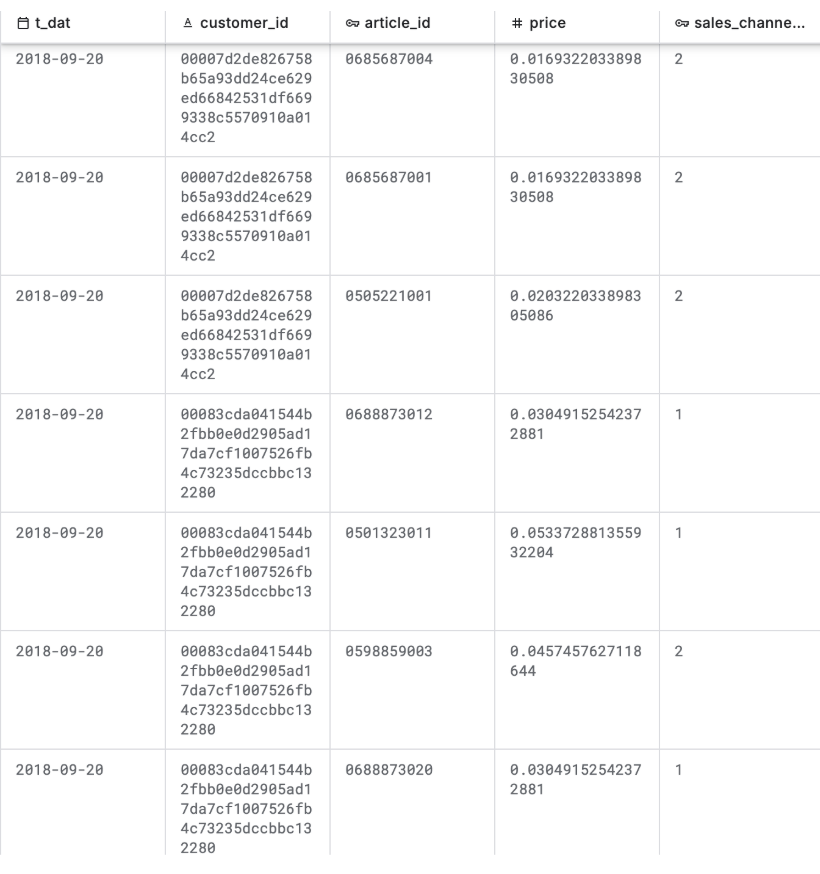

From Kaggle, we can find H&M’s official raw dataset that includes individual H&M transactions. In Figure 2.1, we can see each transaction containing the purchase date,
customer ID, product ID, price, and sales channel. This provides the basic purchase records needed to compare online and physical shopping behavior.
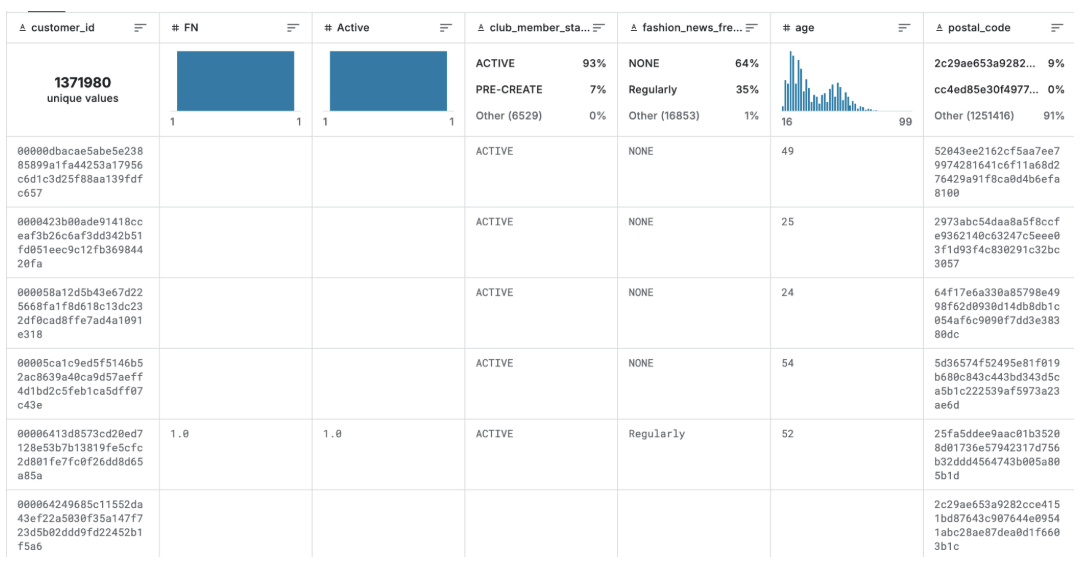
The customer dataset contains information about individual customers, including age, postal code, and their engagement with H&M. (Figure 2.2) This data can help
identify whether different types of customers have different purchasing behaviors.
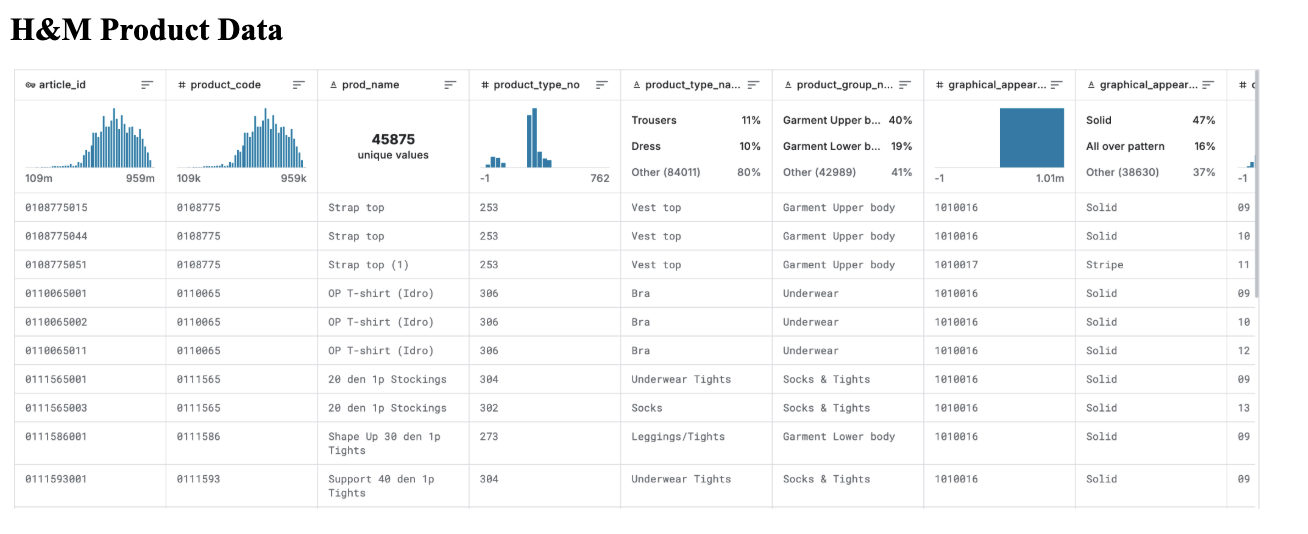
Other than that, in Figure 2.3 there is also specific product information on each of the specific products H&M has. This provides the basic purchase records needed to compare online and physical-store shopping behavior.
This is the first step for research. Collecting all these data from a creditable website, and briefly scan through whats important in those data sets according to what you are trying to research.
Step 2: Find Examples of information
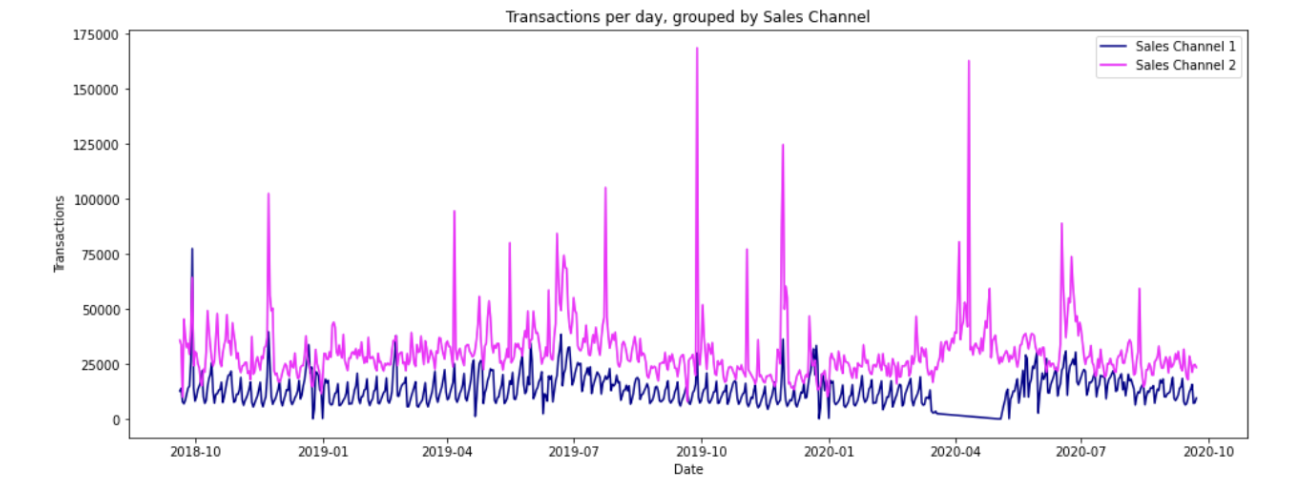

Next, we should find or generate some visual graphic in order to see the data better. In this way, we are able to quickly spot some obvious tendency or propertities of distrubution, which will be helping us a lot when analyzing the statistics.
For example, Figure 3.1 is Distribution of the number of Transactions per day grouped by Sales Channel. Based on the official discussion page on raw data, channel one is offline purchase and channel two is online. We can clearly see that channel 1 is way more consistent without much fluctuation, but channel 2 consists of many spikes. In general channel 2 performs much better than 1.
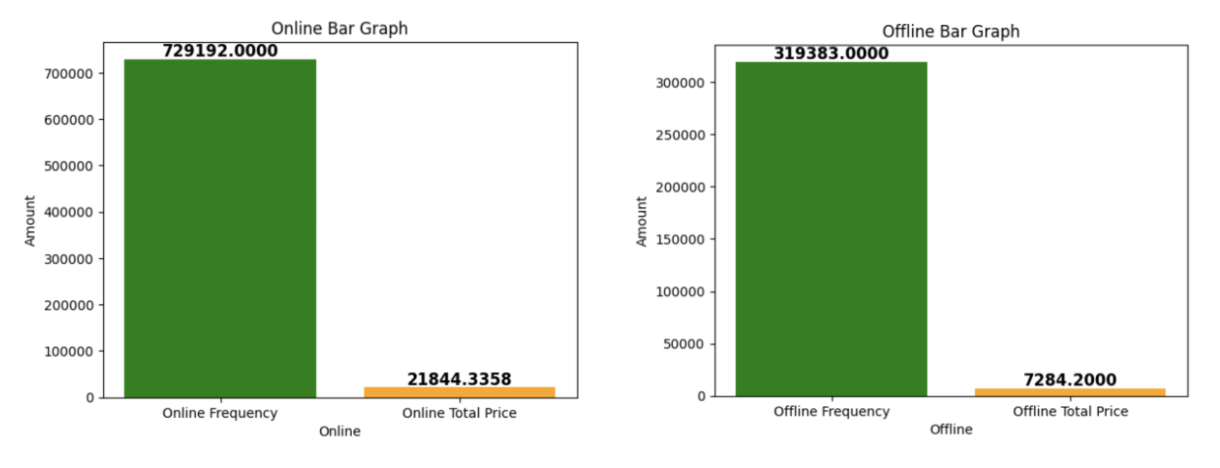

Figure 3.2 visualizations compared purchase frequency and total purchase value between online and offline customers. There is a noticeable difference between the two channels. Online purchases show a much higher frequency and total value than offline purchases.
Step3: Gain Insights or Knowledge
After organizing the raw data into visual information, the next step is to look for patterns and think about what they might mean. At this stage, we need to begin forming insights from the trends and relationships we noticeing in data and graphs. In the H&M case study, comparing online and physical-store purchasing behavior can help us understand how customers may use each shopping channel differently.
Online shopping is the dominant purchasing channel
The higher transaction frequency and total purchase value for online purchase suggest that H&M customers rely more on online shopping than physical ones. This shows that H&M's digital channel plays an important role in its overall customer purchasing behavior.
Physical stores is more consistent on purchasing level
Although physical stores have fewer transactions in general, the activity is very stable over time. This suggests that physical stores are more for some consistent customers but the base would be smaller than online, and online shopping customers shift more but give a larger customer base.
Step 4: Find Potential "Action Items"
Once we have identified useful insights from the data, the final step is to think about how those insights could influence real business decisions. For H&M here, differences between online and physical-store shopping behavior could help guide decisions about promotions and how each channel should be managed to eventually fulfill a business goal.
1. Use different strategies for online and physical stores.
Instead of providing the same promotions or activities on and offline, H&M should make different plans for both channels. For online channels, where purchasing is higher but less consistent, H&M should focus more on short-term promotions to increase the purchase per order, such as exclusive gifts in a short term or personalizing recommendations on app or website so customers can spot more items they want. For physical stores, H&M should focus more on reliable inventory, like improving the experience, utilizing offline the privilege of offline shopping as something you can’t get online. It would also improve the revenue if they launch campaigns and do them offline exclusively. It might lead more people to do offline shopping.
2. Invest more and improve the goods production
H&M could try to look more into what are the items that people are most interested in offline and online to match the back storage with these items since H&M is such a big company with items. They can selectively put items in the spotlight on the ones more likely to be purchased. For online shopping, they can investigate the most purchased items in each geographical area that each back storage covers, so they will not run out.
Now, we have generated some business proposal for management based on the patterns found in the data. This process shows how raw data sets can go more than just numbers and become something useful knowledge for decision making. Business can be better understand consumer behavior and respond to them more effecient and effectively to consumers needs.